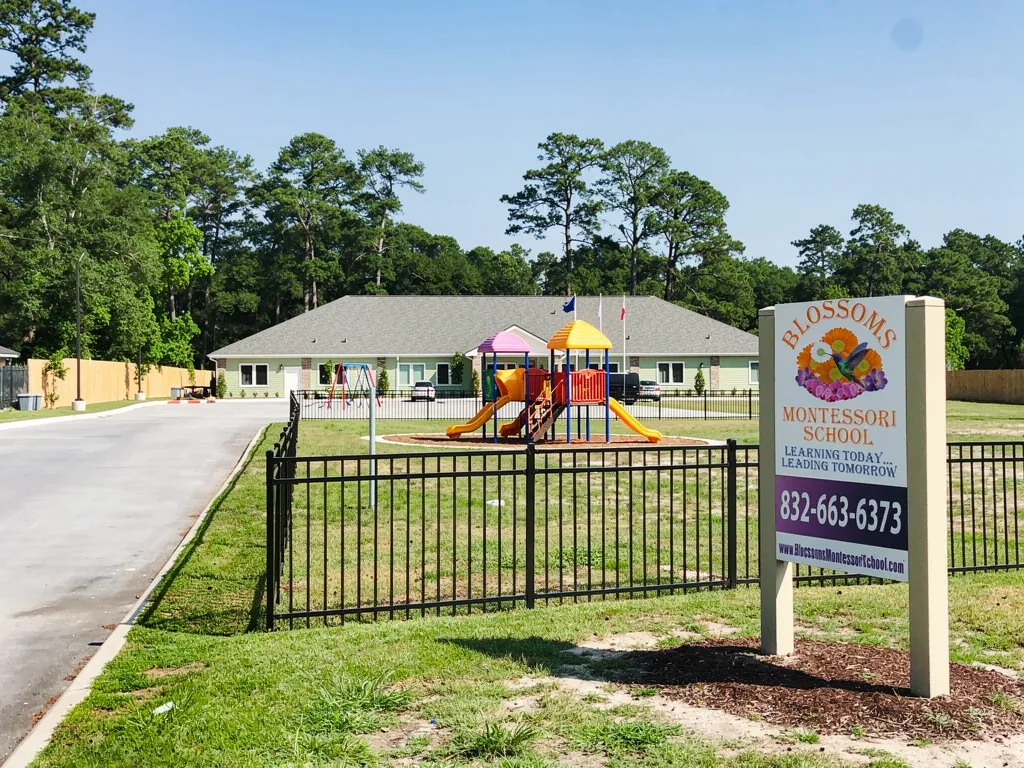
Montessori vs. Traditional Preschool: 10 Differences Parents Choosing the Best Daycare or Preschool Should Know
Montessori vs. Traditional Preschool: 10 Differences Parents Choosing the Best Daycare or Preschool Should Know
"Aren't daycare, preschool, and childcare all pretty much the same?" It's a fair question, from the outside, most early childhood education programs involve small tables, colorful materials, and groups of young children. But spend an hour inside a Montessori classroom versus a conventional preschool or daycare classroom, and the differences become obvious fast.
If you're searching for the best preschool or the best daycare for your family, here are 10 of the most meaningful differences to know before you choose.
1. Who Directs the Activity
In a traditional preschool, the teacher typically decides what the whole class does and when. In Montessori, children choose their own work from a curated set of options, with the teacher guiding rather than directing.
2. Classroom Age Range
Traditional preschool classrooms are usually organized by single-age groups. Montessori classrooms are typically mixed-age (often spanning three years), allowing younger children to learn from older peers and older children to reinforce learning by mentoring younger ones.
3. Learning Materials
Traditional preschools often rely on worksheets, group instruction, and general-purpose toys. Montessori classrooms use a specific, sequenced set of hands-on materials — each designed to isolate one concept a child can explore independently, from counting beads to sandpaper letters.
4. Pace of Learning
Traditional preschool activities are usually time-boxed for the whole group. Montessori allows each child to spend as much time as they need mastering a skill before moving to the next — no artificial rush, no falling "behind" the group.
5. Uninterrupted Work Time
Montessori classrooms typically build in extended, uninterrupted work blocks (often 2–3 hours) so children can develop deep concentration. Traditional preschool schedules are usually broken into shorter, rotating activity segments.
6. Role of Play
Both approaches value play, but traditional preschool often separates "learning time" from "play time." Montessori treats purposeful, hands-on work as the primary mode of learning — the line between "work" and "play" is intentionally blurred.
7. Practical Life Skills
Montessori classrooms formally incorporate practical life activities — pouring, buttoning, food prep, cleaning up — as core curriculum, not just classroom management. Traditional preschools may touch on these skills informally, if at all.
8. Assessment Style
Traditional preschools often use more conventional progress checks and group benchmarks. Montessori teachers rely heavily on ongoing observation of each individual child, tailoring lessons to that child's demonstrated readiness.
9. Classroom Environment
Montessori classrooms are deliberately "prepared environments" — everything is child-sized, purposefully placed, and limited in quantity to encourage focus and order. Traditional preschool classrooms tend to have more general-purpose toys and less environmental structure.
10. Long-Term Philosophy
Traditional preschool is generally focused on preparing children for kindergarten. Montessori is built around a broader developmental philosophy — independence, concentration, and love of learning — that continues well beyond preschool, as reflected in our own Kindergarten & First Grade Program.
So Which Is the Best Preschool or Best Daycare for Your Child?
There isn't a universal answer — both approaches can support healthy child development, and the quality of any individual program matters as much as its label. What matters most is fit: does the environment match how your child learns best, and does it reflect what you want their early years to look like? Our Why Blossoms page walks through what sets an authentic Montessori program apart.
Daycare vs. Preschool vs. Childcare vs. Montessori: A Quick Clarification
It's worth remembering that daycare, preschool, and Montessori aren't three competing categories on equal footing. Daycare generally refers to supervised care, preschool refers to an educational age-stage, and Montessori is a specific teaching method that can be delivered within preschool (or even toddler and elementary) programs. A Montessori school is, in that sense, also a preschool — just one built on a distinct philosophy.
See the Best Preschool and Daycare Difference for Yourself in Spring, TX
The differences above are easiest to understand in person. At Blossoms Montessori School, our Toddler and Primary classrooms put every one of these ten distinctions into daily practice, giving families searching for the best preschool or best daycare in the area a true early childhood education option, not just childcare.
If you're weighing Montessori against a more traditional preschool option in Spring, Texas, we'd encourage you to compare not just websites, but actual classrooms. Book a tour and see which environment feels right for your child.
FAQ
Is Montessori more expensive than traditional preschool? Costs vary widely by school and region rather than by method alone; you can see our current rates on the pricing page.
Will my child be ready for kindergarten after Montessori? Montessori programs are designed to prepare children academically and socially for elementary school, though readiness also depends on the specific program and child.
Can a child switch from traditional preschool to Montessori mid-year? Many children transition successfully; adjustment time varies by child, but the emphasis on individual pacing in Montessori often eases the shift. See more on our FAQ page.


